Welcome to our Winter Newsletter, although as the sun has made an appearance today, it really does feel as though spring could be just around the corner! I am always so grateful for the contributions we receive for the newsletter, it’s a great opportunity to celebrate the work that goes on across the Network. Huge thanks to our contributors for taking the time to write the articles and share the work they are doing with us.
The Karten Network is recruiting Trustees
The Karten Network Charity is currently recruiting new Trustees. It is important that Karten Centres are well represented on our Board. If you are passionate about the use of technology and assistive technology in your workplace this could be just perfect for you! If this is an opportunity you are interested please email dawn@karten-network.org.uk for an informal conversation about the role.
Karten Centre spotlight
It is important that Karten Network Trustees have a good understanding of the range of provision across the Network, at the beginning of Board meetings we have an opportunity for Karten Centres to showcase the work that goes on in their Karten Centre. The next Board meeting will be held via Teams on 9 July at 10.00, please email dawn@karten-network.org.uk to discuss the opportunity of putting your Karten Centre in the spotlight!
Funding for additional equipment
If you are an existing Karten Centre, and it has been more than three years since you last received Karten funding, then you could be eligible to apply for additional funding. The deadline for applications for the next funding round is 12 noon on 30 April 2026. Please contact dawn@karten-network.org.uk to arrange an initial Teams call to discuss the application process.
Online Karten conference for Karten Centre beneficiaries
We are in the very early stages of organising an online event for Karten Centre beneficiaries to get together and participate in an event share and celebrate success across the Network. If you think the people you support would be interested in getting involved in a fun and accessible event please email dawn@karten-network.org.uk. It is very important that Karten Centres have a voice in whatever we decide to organise, so please don’t be shy in suggesting the sorts of activities and things you would like to be included in the event(s). Dependent on the responses received we will organise either one national event, or a series of mini-events clustered geographically or around specific interests.
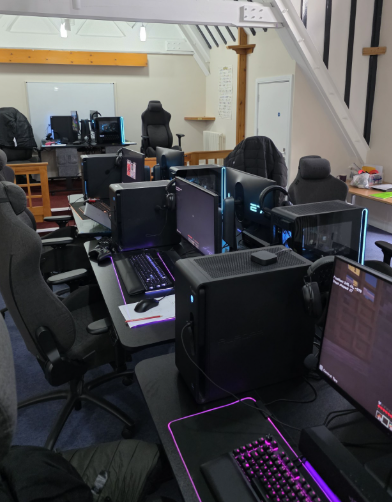
Over the past two years, Portland College has entered the world of esports by offering dedicated gaming sessions to our learners. Starting with just eight learners in our first year, the programme has grown significantly, with 19 learners now actively participating in its second year.
This growth is a testament to the enthusiasm and dedication of our learners and staff, as well as to the college’s commitment to investing in cutting-edge equipment and resources. By doing so, we have ensured that learners not only refine their gaming skills but also develop valuable transferable skills such as teamwork, leadership, and strategic thinking.
Some of our learners have even gained vocational qualifications through their involvement in esports, highlighting the educational opportunities this innovative programme provides. Now, we are taking things a step further by looking to establish connections with other colleges to create a network. This exciting collaboration aims to open up opportunities for online competitions and tournaments, giving learners a chance to showcase their skills on a larger stage.
If you are interested in learning more or becoming part of this network, Rebecca and Ashleigh would be delighted to hear from you.
AI avatars, eye gaze, and the return of “presence” in communication
AI has been present in so many conversations lately, from conferences to policy discussions. Some of these have been about how AI could make things more accessible and improve disabled people’s lives. Alongside that, there are ongoing efforts by many to make sure disabled people are not only part of these conversations but are included in designing and developing the next generation of assistive technology. That matters, because it changes what gets built, and why.
Every so often, a technology story comes along that is not really about the technology. It is about a human problem we all recognise, and a fresh attempt to solve it in a way that respects the person.
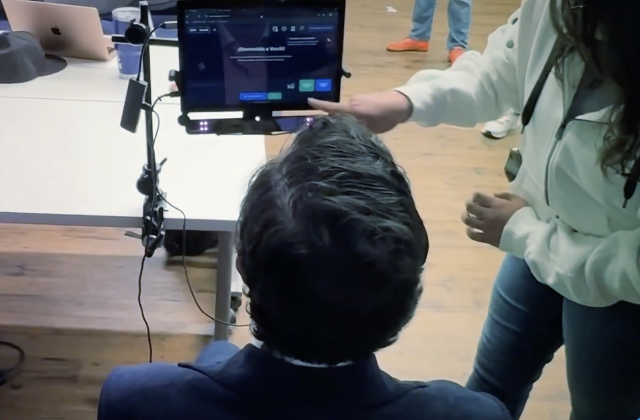
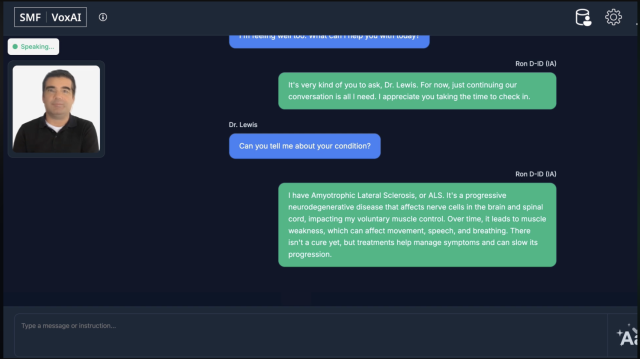
One example of this is SMF VoXAI, developed by the Scott-Morgan Foundation in collaboration with D-ID, an Israeli founded company, alongside other partners including NVIDIA, Lenovo, ElevenLabs and Irisbond.
What is SMF VoXAI?
SMF VoXAI is described as a communication system for people with severe communication disabilities, including people who cannot rely on speech and may have very limited movement. It was publicly presented on the 10th of December 2025 at the AI Summit in New York.
One detail that stood out to me is the involvement of Bernard Muller, the Scott-Morgan Foundation’s Chief Technologist, who lives with motor neurone disease (MND). In the launch materials, he is described as having architected the system using only eye tracking (eye gaze), which is a reminder that this is not only a technology story, but also a story about who gets to shape what is built.
If you would like a bit more context, the Scott-Morgan Foundation has a short YouTube video that explains the idea behind VoXAI and shows an example of how it works.
The system combines eye tracking with an AI-supported communication layer, AI-voice, and an expressive on-screen avatar. The aim is to reduce the delay and effort that can make communication feel slow and exhausting, and to bring back more of the flow of natural conversation.
During the December 2025 launch, it was also mentioned that a two-year research study would be conducted across six countries, looking at the impact of AI avatars on quality of life for people with communication disabilities. It will be interesting to see what comes out of that over time.
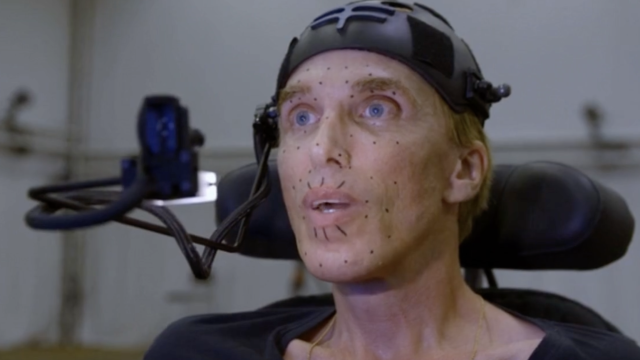
A lot of the attention has been focused on the idea of a “digital twin” described as a personalised, photorealistic avatar intended to preserve appearance and identity as a condition progresses.
VoXAI comes from the Scott-Morgan Foundation, which grew out of Dr Peter Scott-Morgan’s work after his diagnosis. The Foundation has continued that work since his death in 2022. For many people living with progressive conditions, the question is not only whether they can communicate, but whether they can keep a sense of identity and social presence as things change.
What problem is it trying to solve?
For many people who use AAC, communication works, but it is rarely quick. Even when someone has a reliable way to select words, the process takes time, physical effort and concentration, and that has a cost. It can be tiring. It can be frustrating. It can also change how other people respond, especially in fast-moving conversations.
Delays affect the rhythm of interaction. It can be harder to jump in at the right moment, harder to keep up with humour, and harder to say something before the topic has moved on. Over time, that can shape relationships, not because someone has nothing to say, but because the conversation does not easily make space for them.
VoXAI is being presented as an attempt to reduce that gap, by bringing back more of the sense of “presence” in communication. In other words, not only producing the right words, but doing it in a way that feels closer to real conversation.
A digital twin, and the questions it raises
The idea of a “digital twin” is part of what has drawn attention to VoXAI. Put simply, it is being described as a photorealistic avatar created from images or video captured while the person could still move or speak, with the aim of preserving appearance and identity as a condition progresses.
It is a compelling idea, but it also raises difficult questions. Who controls the images and the avatar. How consent is captured and revisited over time. What happens if the person’s preferences change. What a family can or cannot request. What happens after death. And, most importantly, whether the person remains in control of how they are represented.
These are not reasons to dismiss the idea. They are reasons to treat it carefully. If this is going to become a real part of AAC and assistive communication, it needs to be built around the person’s control, not only around what is technically possible.
Cost and access
One practical detail mentioned in the launch announcement is pricing. The Foundation describes a freemium model, with basic access offered free, and premium features listed at $30 per month. If that remains the case, it is an interesting contrast to the cost of some high-end AAC solutions, but it also introduces the usual questions that come with subscription models: who pays long term, what happens if a subscription lapses, and how this fits with procurement and funding in real services.
Final thoughts
What I find interesting about VoXAI is not simply the use of AI, or the fact that it can generate an expressive avatar, but the shift in emphasis. It is treating conversational flow, identity, and social presence as part of the communication challenge, not as optional extras.
This is not a replacement for every AAC system, and it does not need to be. For some people, a familiar, stable AAC approach will remain the best fit. For others, especially where conditions are progressive, the promise of preserving identity and presence may be particularly meaningful.
If there is a wider lesson here, it is the same one that comes up again and again. The people who live with these realities need to be involved early, listened to properly, and part of the decisions, not just the demonstrations. That is how we end up with technology that genuinely helps, rather than technology that simply looks impressive.
Get in touch
As always, I am keen to hear how you are using AAC, mobile, and other assistive technology in your setting, and whether AI is starting to come into those conversations too. If you would like a particular topic covered in the next newsletter, please let me know. Finally, please feel free to contact me if you have a question or need technical help and support.
Hot off the press, we can confirm that TechAbility conference is planned for the 19th of November 2026. It’s not too soon to start thinking about what you could bring to the conference, or what subjects you’d like covered or guest speakers you would like to attend.
Evidence Review: Disabled people’s experience of UK education
The review highlights the importance of accessible digital learning materials, the option to complete assessments on computers rather than handwriting and the role of online learning in giving disabled learners greater control, flexibility and independence. It also finds that feedback is most effective when provided in formats compatible with assistive technology (ATech), such as editable text rather than scanned documents.
Champions: LinkedIn Recognition
For those of you who are or have a TechAbility Champion you can now have this added to your LinkedIn profile to recognise the commitment, work and development involved in the role.
In future we may open this to conference contributions so let us know if this would be of interest too.
National AI Awareness day: 4th June 2026
AI awareness day is a new national campaign aimed at exploring, debating and build skills around AI through engaging activities, creative challenges and important discussions about the individual and societal implications of using AI.
Although the campaign is aimed at schools, the resources are universally adaptable, and the subject matter is increasingly important.
Following our first ever Assistive Technology Week in 2025, the wheels are now in motion for ATW 2026 at Sense College Loughborough. The event, which is due to take place from 20 – 24 April 2026, will give our students, staff, parents & carers and local community another opportunity to increase their awareness and understanding of available assistive technologies.
While our first ATW gave attendees an introduction to assistive technology devices and software, this year’s event will focus on four key themes: 3D printing, AI, transition from college to home, and virtual reality. We are currently contacting a number of organisations who we hope will take part in our Assistive Technology Week, either in-person or virtually.
We are looking forward to being able to share more information about the event soon.
The service recipient is a 29-year-old law student.
On 7 October 2023, he was called up for reserve duty and joined the fighting in the Gaza border region. On 8 October 2023, he was injured by shrapnel and completely lost his vision. He spent an extended period in a rehabilitation unit.
During hospitalisation, he began receiving initial rehabilitation services, including orientation and mobility training, white-cane use, and smartphone accessibility skills. After being discharged, he joined a technological training program in Migdal Or’s vocational rehabilitation unit, where he began learning computer accessibility skills such as touch typing, screen-reader use, and keyboard shortcuts to support independent functioning.
In parallel, he continued rehabilitation aimed at strengthening his smartphone skills and using dedicated accessibility apps to improve daily independent functioning.
At a certain stage, he independently chose to stop the rehabilitation process, stating that he no longer felt it was necessary. At the same time, he increasingly relied on an assistant (usually his partner) for mobility and orientation, to the point that he stopped using the white cane and other functional techniques.
At the start of his technological training, he demonstrated persistence and motivation despite understandable frustration caused by the need for intensive practice. However, after taking a two-month break for his law internship, he had difficulty returning to consistent training and practice. As a result, it was decided to discontinue the program, and the rehabilitation process was halted before achieving its full potential.
Analysis
Two key issues emerged in this case:
1. Stage of acceptance of disability
It appears that at the time he arrived at Migdal Or, the service recipient was not yet ready to commit to a structured process intended to strengthen his functional independence following the loss of vision. In our professional assessment, rehabilitation can be renewed successfully once he demonstrates readiness, insight, and an understanding of what is required to rebuild independent functioning and reduce reliance on others.
2. Influence of support services
Rehabilitation authorities such as the Ministry of Defence provide extensive support mechanisms, including high assistant allowances, multiple personal assistants, and various forms of functional support and volunteers. While these services are vital, in some cases they may unintentionally delay the development of independent functional skills. When support becomes a substitute for rehabilitation rather than a bridge toward independence, the individual’s potential to achieve full functional ability is limited.
This case highlights the importance of ongoing collaboration between all rehabilitation bodies to ensure a holistic approach and a comprehensive plan tailored to the individual’s personality, stage of disability acceptance, needs, and abilities.
Current status
He is currently preparing for the Bar examination.
If you would like to watch more about Matan’s story, below is a short news interview (YouTube). The film is in Hebrew. You may be able to switch on English subtitles using YouTube’s subtitle/CC settings, although the translation may be imperfect and may include some inaccuracies. The video focuses on Matan’s rehabilitation journey and his resilience as he adapts to life after losing his sight.
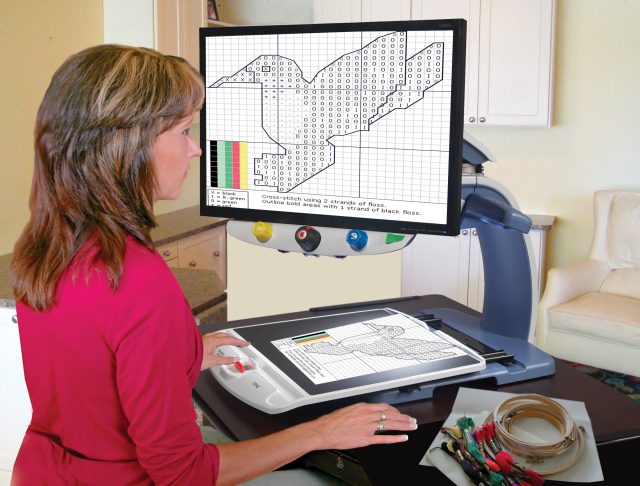
For many people with low vision, a CCTV (closed-circuit television) is a familiar and trusted assistive tool. In this context, “CCTV” does not mean security cameras. It refers to an electronic magnification device used to enlarge text, documents, and everyday objects to support reading and writing. These systems come in desktop and portable versions, and they can make a significant difference to independence at home, in education, and at work.
In recent years, the iPad has become a practical alternative to dedicated CCTV devices for some users. With the right setup, it can provide high-quality magnification, flexible viewing options, and access to a broader range of accessibility tools in one device.
What a traditional CCTV does well
A dedicated CCTV is designed primarily for magnification. It uses a camera to capture what is on a desk or in front of the user, then displays it on a screen with adjustable zoom and contrast. Many people rely on it for reading mail, filling in forms, looking at labels, and writing, because it provides stable positioning and consistent performance. Desktop units can be particularly helpful for long reading sessions or sustained writing tasks.
Why consider an iPad instead
The iPad can offer a cost-effective and multi-purpose option, especially if a person already owns one or can access one through school, work, or a service. In addition to magnification, it also supports a wide range of iOS accessibility features, including VoiceOver and dynamic zoom options. Unlike a single-purpose CCTV, the iPad can also be used for communication, learning, entertainment, and daily planning, which may reduce the need for multiple devices.
Another advantage is personalisation. Users can adjust magnification and contrast to match their needs and preferences, and iPads benefit from regular software updates that can improve performance and accessibility over time.
Making the iPad work like a CCTV
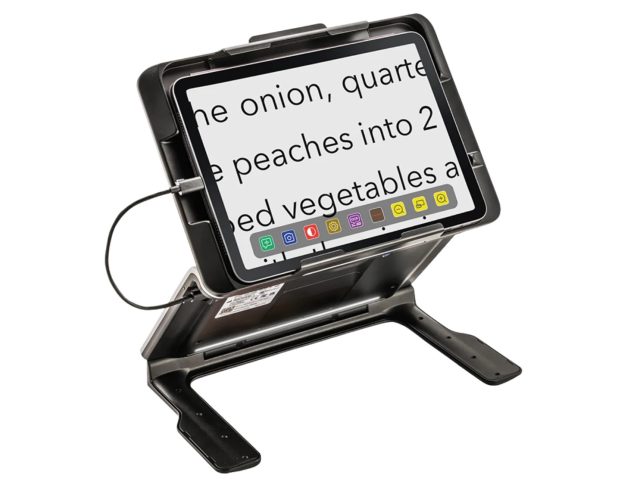
A key practical adaptation is using a stand. With a stable stand, the iPad can be positioned above reading material for hands-free use, which is especially useful for reading and writing tasks. This setup can feel more like a traditional CCTV experience, because it keeps the camera steady and frees the user’s hands to turn pages, write, or handle items.
When paired with appropriate magnification and camera-based apps, the iPad can support common CCTV tasks such as enlarging printed text, viewing objects on a table, and adjusting contrast for improved readability.
How it compares to a dedicated CCTV
A quick comparison is helpful here. In general, an iPad-based setup tends to score highly for portability, display quality, and personalisation. Dedicated electronic magnifiers (often called CCTVs) can vary in portability depending on the model, and they are typically more expensive. Where the iPad can really stand out is in the extra functionality it can offer alongside magnification, such as OCR (text recognition) and a wider range of built-in accessibility features, while many dedicated devices remain focused primarily on magnification and contrast.
When a dedicated CCTV may still be the better fit
An iPad will not replace every CCTV use case. Some people benefit from the simplicity and purpose-built design of a dedicated device, especially for long sessions of reading and writing, or when a stable desk-based setup is essential. Others may prefer the physical controls and specialised ergonomics of traditional systems. The best choice often depends on the person, their vision, their daily activities, and what support they have for setup and training.
Video demonstration
If you would like to see the setup in action, there is a short YouTube demonstration in Hebrew that walks through using an iPad in a CCTV-style setup. Even if you do not speak Hebrew, the visuals can be useful for understanding how the iPad is positioned on a stand and how the camera-based magnification is used in practice. Depending on your YouTube settings, you may also be able to enable English subtitles, although the translation may not always be accurate.
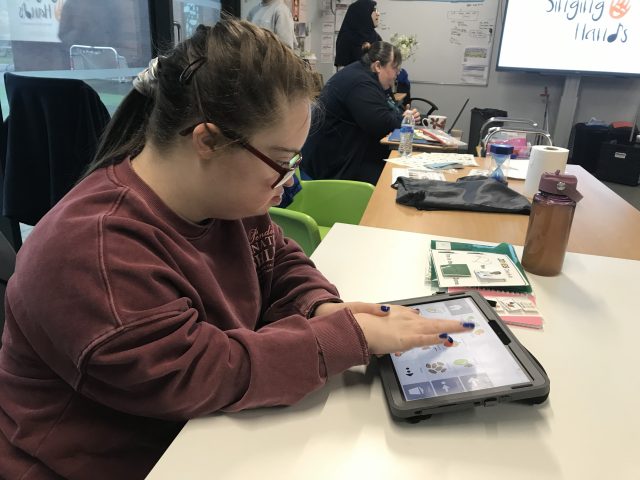
The process of assessing a young person for high tech AAC devices is a long process; after gathering evidence and applying for funding, a young person can be left with no device for as long as 6 months. Thanks to a grant from the Karten Trust Bridge College has been able to purchase 2 brand new devices that mean these young people can keep their newfound voice whilst waiting for assessment and funding requests to find their way through the appropriate channels. Tish took to her new device immediately and was enjoying communicating how she was feeling and discussing what music she wanted in ways she had never been able before and losing this brand-new ability for even a couple of weeks would have been hard for her. Instead, using our new loan out device she can keep and practice this new communication, preparing her for her future.
Using Captions and Transcription to Enable Inclusive Learning
Vision and Values
The Ono Academic College has committed itself to creating meaningful change within Israeli society.” Guided by this vision, the Centre for Academic Support and Accessibility is advancing innovative solutions that promote equal participation for students with disabilities in higher education.
The Challenge: Deaf and Hard of Hearing Students in Academia
Deaf and hard of hearing students face significant barriers in academic environments, including difficulties accessing spoken lectures, reliance on human-mediated support, limited availability of captioned recordings, and inconsistent transcription quality. These challenges are particularly evident in content-heavy courses and discussion-based teaching.
Identifying the Need
The pilot initiative emerged in response to direct requests from students who require accurate and accessible captions, especially for recorded lectures, as a foundation for comprehension, revision and independent learning.
The Solution: A Hybrid Human–AI Approach to Captioning
The Centre for Academic Support and Accessibility at Ono Academic College has launched a pilot based on a hybrid model that combines AI-generated captions with human refinement. While AI enables fast and scalable access to lecture captions, human involvement ensures accuracy, clarity and sensitivity to the linguistic and academic complexity of Hebrew. This approach reflects a core value of accessibility work: technology serves inclusion most effectively when it is guided by human expertise, responsibility and commitment to equal participation for all students.
Benefiting Wider Student Populations
Beyond deaf and hard of hearing students, AI-generated captions can support students with attention deficit disorders and those studying in Hebrew as a second language, enhancing focus, comprehension and retention of academic content.
Technology as a Tool for Social Inclusion
The integration of AI into accessibility practices reflects not only technological innovation, but a broader social commitment: reasonable adjustments are a prerequisite for equal participation in higher education.
Implementation Challenges
Alongside its significant potential, the implementation of AI-based captioning presents several challenges:
Technical infrastructure
Research in speech recognition consistently demonstrates that audio quality is a key determinant of transcription accuracy. Microphone quality, lecturer proximity, and background noise levels all directly affect system performance.
Collaboration with academic staff
Effective optimisation requires close cooperation with lecturers, including awareness of clear pronunciation, appropriate speaking pace, consistent terminology, and minimising overlapping speech. Such practices substantially improve automatic captioning outcomes.
Linguistic challenges in Hebrew
Hebrew presents unique linguistic barriers for AI-based speech recognition, particularly in academic contexts. Its lack of written vowelisation, frequent homophones and rich morphology increase transcription error rates, especially when specialised terminology is used. As a low-resource language in speech processing, Hebrew requires systems to infer pronunciation and meaning from context alone, making automated captioning more sensitive to speaking style, audio quality and domain-specific language.
Current solutions and human refinement
To address these challenges, many systems adopt a human-in-the-loop approach, combining AI-generated captions with post-editing or quality control by trained human reviewers. Human refinement enables correction of linguistic ambiguities, specialised terminology and contextual errors, significantly improving accuracy and usability. While this hybrid model enhances quality, it also highlights the continued importance of professional expertise alongside technological innovation.
Looking Ahead
This pilot represents an initial step towards broader adoption of AI-based accessibility tools. By combining technological innovation with human expertise and institutional commitment, Ono Academic College continues to advance inclusive excellence and equal opportunities in academia.
References
Turetzky, A., Tal, O., Segal-Feldman, Y., Dissen, Y., Zeldes, E., Roth, A., Cohen, E., Shrem, Y., Chernyak, B. R., Seleznova, O., Keshet, J., & Adi, Y. (2024). HEBDB: A weakly supervised dataset for Hebrew speech processing. Retrieved from https://pages.cs.huji.ac.il/adiyoss-lab/HebDB/
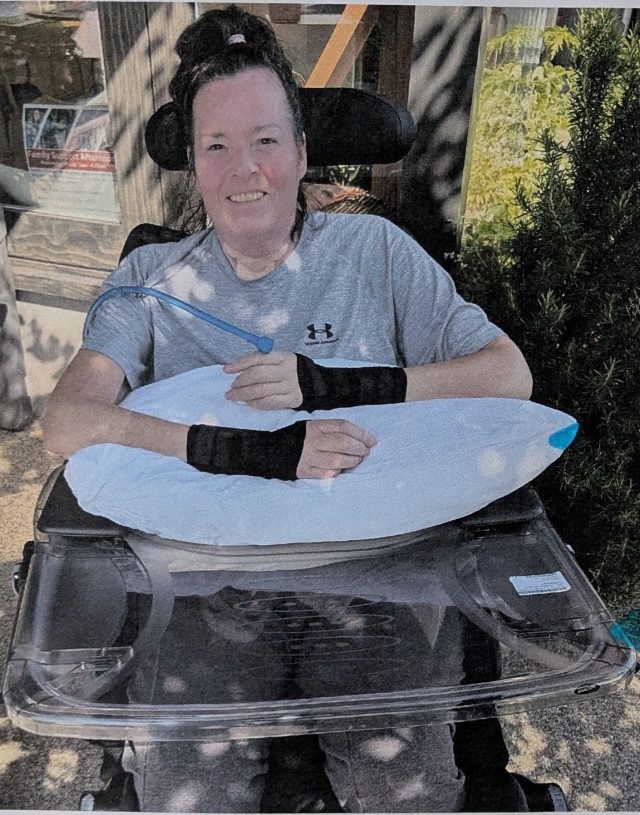
I returned home from work and at some point after 8pm I fell backwards down my stairs, hitting my neck on the radiator and knocking myself unconscious. The alarm was not raised until after 9am the next day when I failed to pick up my colleague from work. She contacted my boss who lived in the next village, who came to the house with a friend who had a key and they found me trapped behind my radiator unconscious. They contacted the ambulance service but was told it would take 6 hours minimum. After explaining what had happened, an air ambulance was sent instantly and I was airlifted to Heath Hospital in Cardiff.
After several tests and scans the doctors performed an operation to try and relocate two discs (C5-C6) that had moved forward and was pressing on my spinal cord. During the operation my blood pressure dropped so they had to finish prematurely to save my life. I still had no comprehension as to the damage that I had done. I was in the intensive care unit for several weeks where family and friends visited but I have no recollection they were there even though I was talking to them. I remember asking every person that treated me to help me to get out of bed and everyone explained that I had a serious injury to my neck, and they wouldn’t be able to help, but that didn’t stop me offering to bribe them to not tell anyone!
I had vivid dreams which I thought were true that I was in danger of having my organs harvested and this continued and was taken so seriously by the hospital that they contacted the police and the Criminal Investigation Department (CID) got involved. Over the next few months, I was visited frequently by CID and I provided them with information, names and descriptions of the people involved! By the time I was moved to Morriston Hospital in Swansea in October 2024 I realized that the organ harvesting was a side effect from the drugs I was being given and retracted my accusations with a very red face. Thank God I can laugh about that now.
Throughout my time in Cardiff and Swansea I don’t think I fully understood exactly what had happened to me because of the damage that was caused. Even though they were telling me daily that I would never walk again, it didn’t sink in. Whilst in Swansea I contracted C. diff and pneumonia twice and was not sent to my care home until March 2025, just in time for my 60th birthday. I had planned an isle cruise but had to cancel – I will celebrate, but at a later date. I was lucky to be transferred to the Spinal Injury Centre in University Hospital Llandough for rehab from 23rd April to 10th September 2025 and it is only there that I had my injuries fully explained by my consultant. It was also there that I learnt to appreciate what I can do and not focus on what I can’t do.
They have been so wonderful and helpful, it is hard to explain in words. All the staff and patients are like a family and it’s this that has made the difference to my recovery. The main person that has been constant since September 2024 has been Drew, an Aspire Assistive Technologist. He has provided support and he is amazing with Assistive Technology.
Without Drew my journey would have been so much more difficult and honestly, I don’t think I could have done this without him. I am a technophobe and a bit of a dinosaur when it comes to anything electronic and I honestly didn’t know what was out there to help, but Drew has stayed patient, calm and friendly throughout.
I now embrace technology and will be actively be using it to be able to return to work. Previously I used a keyboard and a conventional mouse to search the web using Microsoft and Google to carry out my role at Citizens Advice in Swansea. Drew set me up with Voice Access on my phone and then we progressed to computer access. I trained to use an Integra Mouse and Dragon dictate after trialing several other applications. Using these two tools together is the closest match to what I was doing before my injury.
The most frustrating thing I still find is not being able to use my hands, as they are fixed at a 90 degree angle, and my fingers don’t move which means I’m unable to type, write or hold anything (hairbrush, toothbrush etc) so I am asking for any aids to help me with these tasks.
I miss my hobby, which is painting rocks to leave out for children to find, but I’m hopeful that with I will be able to do this again. I have learnt so much about the spine and the central nervous system from the Patient Education talk and that has equipped me with the knowledge and information to be able to deal and recognize the challenges that come with a spinal cord injury such as bladder, bowels and skin care.
I’m more than grateful for the help and continued support from Aspire, I could never have done this without them.
Shalva, the Israel Association for the Care and Inclusion of Persons with Disabilities, promotes the integration of individuals with disabilities into Israeli society by providing holistic support throughout the lifecycle. The Adult Department currently includes approximately 100 participants employed both in Shalva and in the wider workforce, all receiving tailored professional guidance.
As part of the department’s activities, we were generously granted access to the VITA learning platform by the Karten Foundation. VITA is a virtual job interview simulator with varying levels of difficulty. It enables graduates to practice communication skills, self-expression, and coping with employment-related scenarios in preparation for integration into the open labor market or supported employment.
Use of the Platform During Wartime
During the recent war, graduates faced complex emotional challenges, including processing national trauma with limited cognitive tools. In this reality, the VITA platform was utilized to create a safe, stable, and structured space where they could continue to dream, aspire, and practice employment skills.
Many participants connected to the platform in a heartfelt and innocent way, forming a personal bond with the virtual interviewer. Those who experienced the platform expressed a strong desire to return and continue practicing, reporting feelings of satisfaction and hope.
Supporting Tools for the Platform
Alongside the VITA platform, the following complementary tools were developed to collect qualitative data from both graduates and employers:
Demographic Questionnaires – Collect personal data, employment background, interests, and vocational needs.
Employer Questionnaires – Assess the graduate’s suitability for a role, considering their abilities and the support they require.
Training Protocols – Document the training process, including practice stages and difficulty levels.
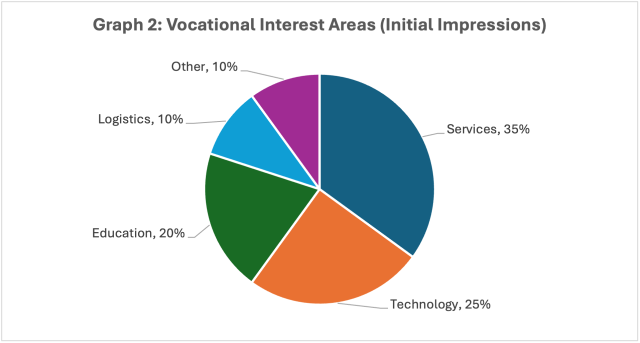
Graphs for Illustration
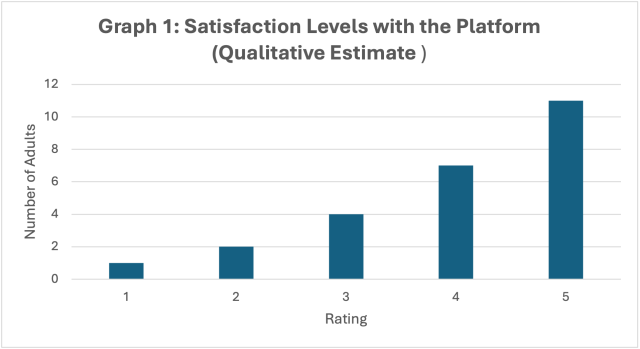
Most adult participants rated the platform 4–5, expressing emotional connection and a sense of achievement.
This graph reflects the vocational aspirations of adult participants as identified in the questionnaires.
Proposal for Future Research
Suggested Title
The Impact of the VITA Platform on Vocational Self-Efficacy Among Adults with Disabilities
Research Objectives:
Examine whether practicing with the platform enhances self-efficacy.
Assess the platform’s influence on readiness for employment.
Explore the role of parents in the process.
Research Methodology:
Pre- and post-practice questionnaires
In-depth interviews with graduates and parents
Qualitative analysis of participant feedback
Expected Outcomes:
A working model for integrating technology into vocational preparation
Recommendations for expanding platform use in additional frameworks
Summary
The use of the VITA platform in Shalva’s Adult Employment Department represents a breakthrough in vocational preparation for individuals with disabilities. During a time of uncertainty, the platform provided a safe, empowering, and professional space. We view it as a significant tool for continued personal and vocational development and recommend expanding its use and involving parents in the process.
Dr. Liron Benisti Director of Research and Development at Shalva
We use cookies on our website to give you the most relevant experience by remembering your preferences and repeat visits. By clicking “Accept All”, you consent to the use of ALL the cookies. However, you may visit "Cookie Settings" to provide a controlled consent.
This website uses cookies to improve your experience while you navigate through the website. Out of these, the cookies that are categorized as necessary are stored on your browser as they are essential for the working of basic functionalities of the website. We also use third-party cookies that help us analyze and understand how you use this website. These cookies will be stored in your browser only with your consent. You also have the option to opt-out of these cookies. But opting out of some of these cookies may affect your browsing experience.
Necessary cookies are absolutely essential for the website to function properly. These cookies ensure basic functionalities and security features of the website, anonymously.
Cookie
Duration
Description
cookielawinfo-checkbox-analytics
11 months
This cookie is set by GDPR Cookie Consent plugin. The cookie is used to store the user consent for the cookies in the category "Analytics".
cookielawinfo-checkbox-functional
11 months
The cookie is set by GDPR cookie consent to record the user consent for the cookies in the category "Functional".
cookielawinfo-checkbox-necessary
11 months
This cookie is set by GDPR Cookie Consent plugin. The cookies is used to store the user consent for the cookies in the category "Necessary".
cookielawinfo-checkbox-others
11 months
This cookie is set by GDPR Cookie Consent plugin. The cookie is used to store the user consent for the cookies in the category "Other.
cookielawinfo-checkbox-performance
11 months
This cookie is set by GDPR Cookie Consent plugin. The cookie is used to store the user consent for the cookies in the category "Performance".
viewed_cookie_policy
11 months
The cookie is set by the GDPR Cookie Consent plugin and is used to store whether or not user has consented to the use of cookies. It does not store any personal data.
Functional cookies help to perform certain functionalities like sharing the content of the website on social media platforms, collect feedbacks, and other third-party features.
Performance cookies are used to understand and analyze the key performance indexes of the website which helps in delivering a better user experience for the visitors.
Analytical cookies are used to understand how visitors interact with the website. These cookies help provide information on metrics the number of visitors, bounce rate, traffic source, etc.
Advertisement cookies are used to provide visitors with relevant ads and marketing campaigns. These cookies track visitors across websites and collect information to provide customized ads.