
S, 33, has been integrated in the Aliza Center for six years. S’ sits in a wheelchair, and his movement is lacking in all four limbs. However, his cognitive functioning is mediocre, which often frustrates him. For years S’ complained that he can’t walk and can’t eat alone. He asked a lot: “Why can’t I eat alone? Why can’t I walk?”. As a center, we tried to give S’ as much emotional support as we could, but it was clear that S’ needed significant personal empowerment.
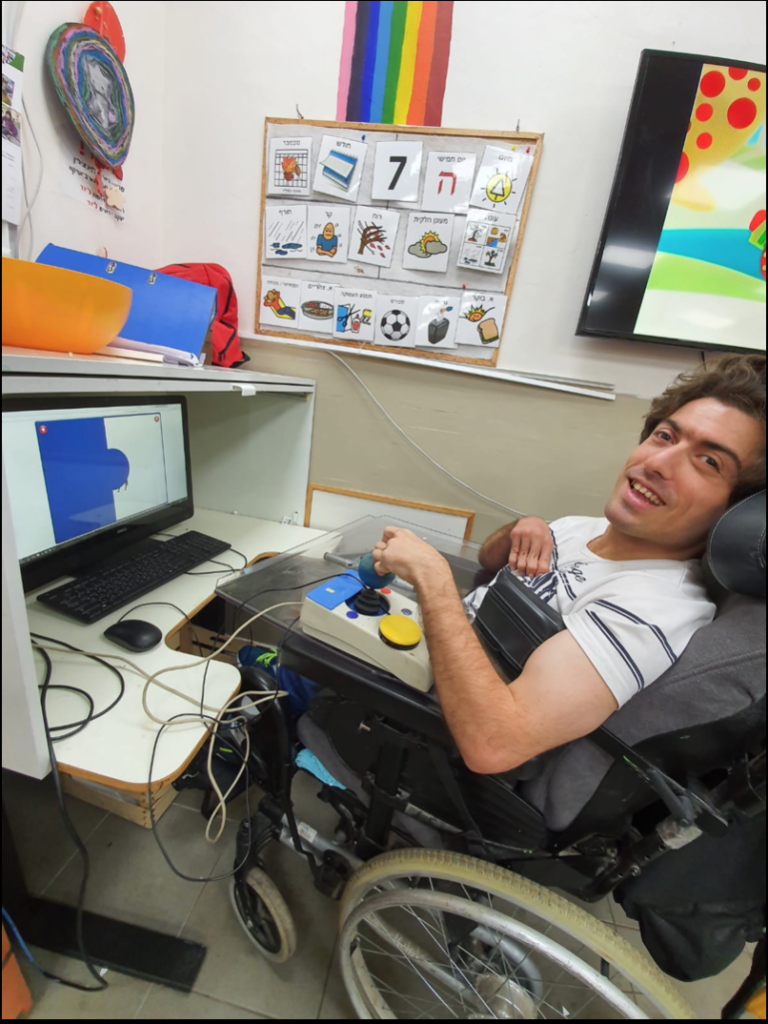
The solution came unexpectedly, through cognitive work: S’ worked on the computer on the Gingim gaming site using a switch, in simple action-reaction games, due to the motor difficulty. In order to promote him to more complex games, he began to practice working with a joystick; S’ began the work in individual therapy with an occupational therapist, and gradually the use of the joystick was transferred to the staff. He now plays on the computer almost daily.
Not only does the joystick allows S’ independence in using the computer and a higher level of cognitive practice – it has also allowed him immense personal empowerment, which filled him with pride and joy. Gradually, the complaints about eating and walking disappeared, and the questions changed: “When do I play on the computer? Have you seen how I play on the computer? Do you know that I play on the computer alone?”
Today S’ plays on the computer almost completely independently, practicing high motor and cognitive skills – but most importantly: he is much happier, satisfied and self-confident.
Article meta data
Clicking on any of the links in this section will take you to other articles that have been tagged in the same category.
- This article was written by the Chimes Karten Centre
- Featured in the Karten Spring 2020 Newsletter
- This article is listed in the following subject areas: Case Study, Centre News